
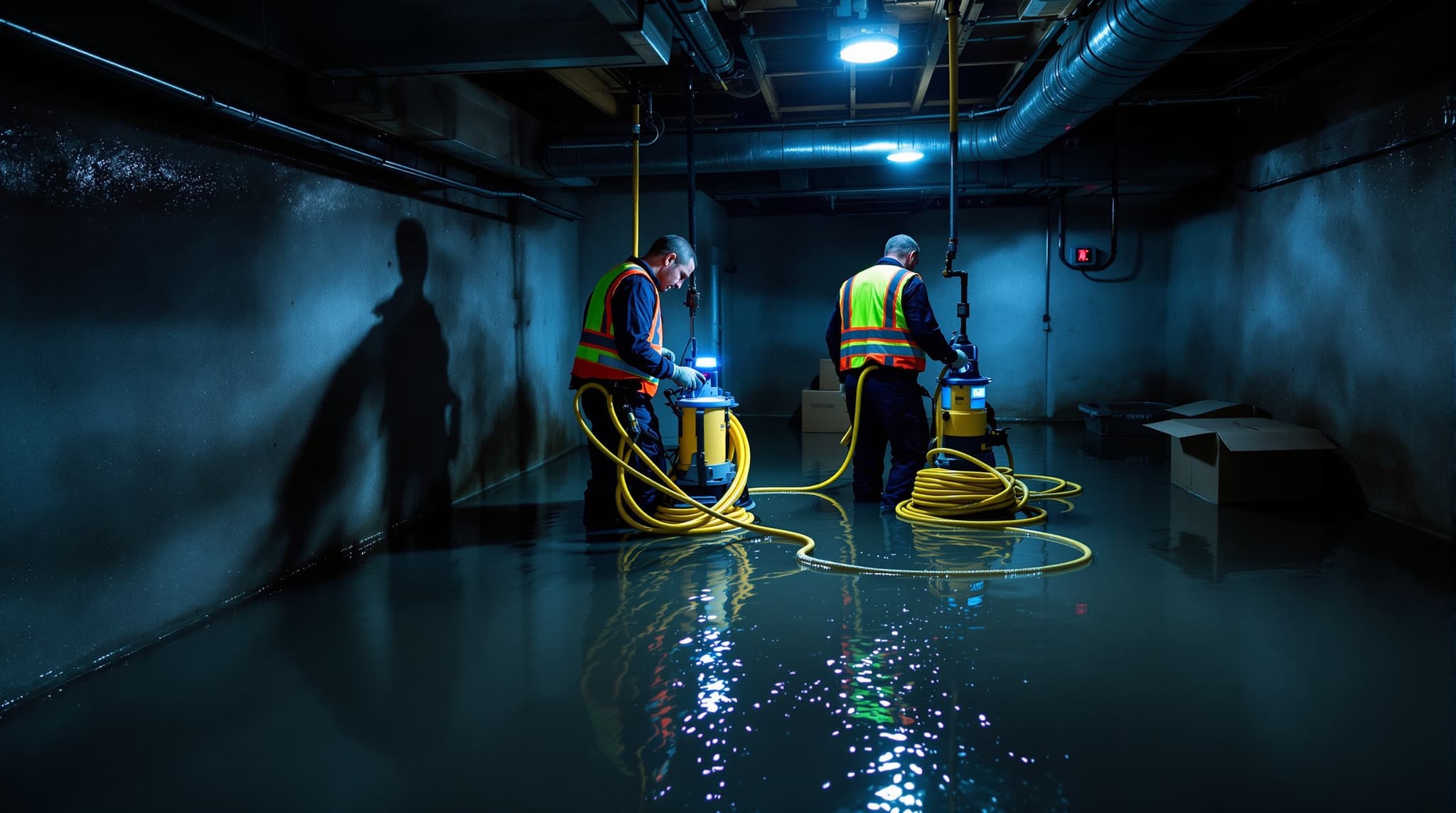
Burst Pipe Response
Levittown, Nassau
Burst pipe under kitchen sink flooded 800 sq ft of first floor. Extracted water, removed kick plates, set up 6 air movers and 2 LGR dehumidifiers. Direct billing with Allstate.
Long Island's most common water emergency.
Long Island's high water table, old homes, and frequent storms make basement flooding the single most common water emergency we respond to. Whether it is sump pump failure, foundation seepage, a burst basement pipe, or storm-surge flooding — the playbook is the same: pump fast, extract, dry hard, and protect the structure from mold. Nassau and Suffolk County's FEMA flood zone communities — South Shore communities including Freeport, Valley Stream, Long Beach, and Babylon — face a specific risk profile: coastal flood zones (FEMA Zone AE) where storm surge from nor'easters can overwhelm storm drains and push water into basements from below, not just through windows and doors. Babylon is a South Shore community particularly prone to storm surge flooding from Great South Bay. We respond within 2 hours to flood calls anywhere in the Town of Babylon — Babylon village, Lindenhurst, North Babylon, West Babylon, Amityville, and Copiague. Our Bay Shore staging location means same-day emergency response, 24 hours a day.
Truck in under 60 min
Every job follows the same checklist. No shortcuts, no improvisation, no "we'll see how it goes."
High-volume water extraction — gas pumps for deep water, truck-mounted extractors for residual
Contents triage — what can be saved, what is a loss
Demo wet carpet, padding, baseboard, lower drywall where required
Antimicrobial treatment on all exposed framing and subfloor
Structural drying with air movers and dehumidifiers (typically 5-9 days)
NFIP flood insurance claim documentation for Zone AE properties
Final moisture readings documented for insurance
We arrive, evaluate water depth, source, and containment risk. If the source is still active, we shut it off first. For flood zone properties, we identify whether the water is groundwater, storm surge, or plumbing-source — it determines coverage.
Standing water pumped out. Gas-powered submersible pumps for deeper events, truck-mounted extractors pull trapped water from carpet and porous materials.
Non-salvageable material cut out and disposed. Exposed structure treated with EPA-registered antimicrobial within the first hours to prevent mold.
Air movers and LGR dehumidifiers set up in calculated positions. Daily moisture logs track progression to dry standard.
Once dry, we hand off to your insurance-approved rebuild contractor with the moisture logs and photos they need.
Basement flooding cleanup typically runs $4,000-$12,000 depending on water depth, square footage, and contents. Covered by most homeowners policies when source is sudden-and-accidental. FEMA Zone AE storm surge events require separate NFIP or private flood insurance.
Homeowners with a flooded basement from any cause: sump pump failure, burst pipe, sewer backup, storm surge, foundation seepage, groundwater intrusion. FEMA flood zone homeowners with storm surge events.
Sudden-and-accidental flooding (pipe burst, sump failure during active use) is typically covered by standard homeowners insurance. Storm surge and groundwater require NFIP or private flood insurance. We help identify coverage, document cause-of-loss, and bill your carrier directly.
Burst pipe under kitchen sink flooded 800 sq ft of first floor. Extracted water, removed kick plates, set up 6 air movers and 2 LGR dehumidifiers. Direct billing with Allstate.
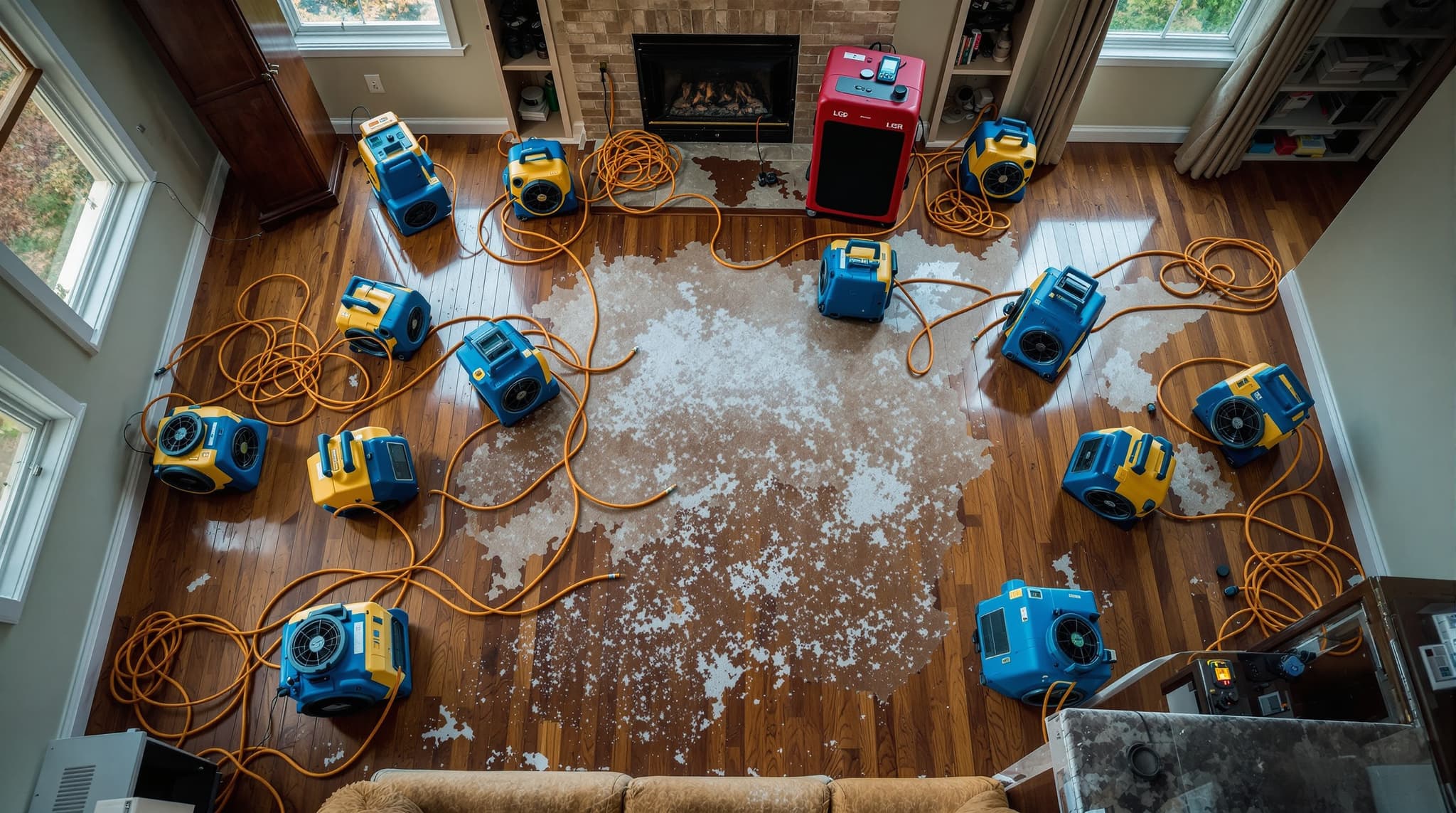
Basement flooding after heavy rain. 4 inches of water, pumped out in 2 hours, full structural drying over 5 days. Moisture readings verified dry. GEICO claim handled.
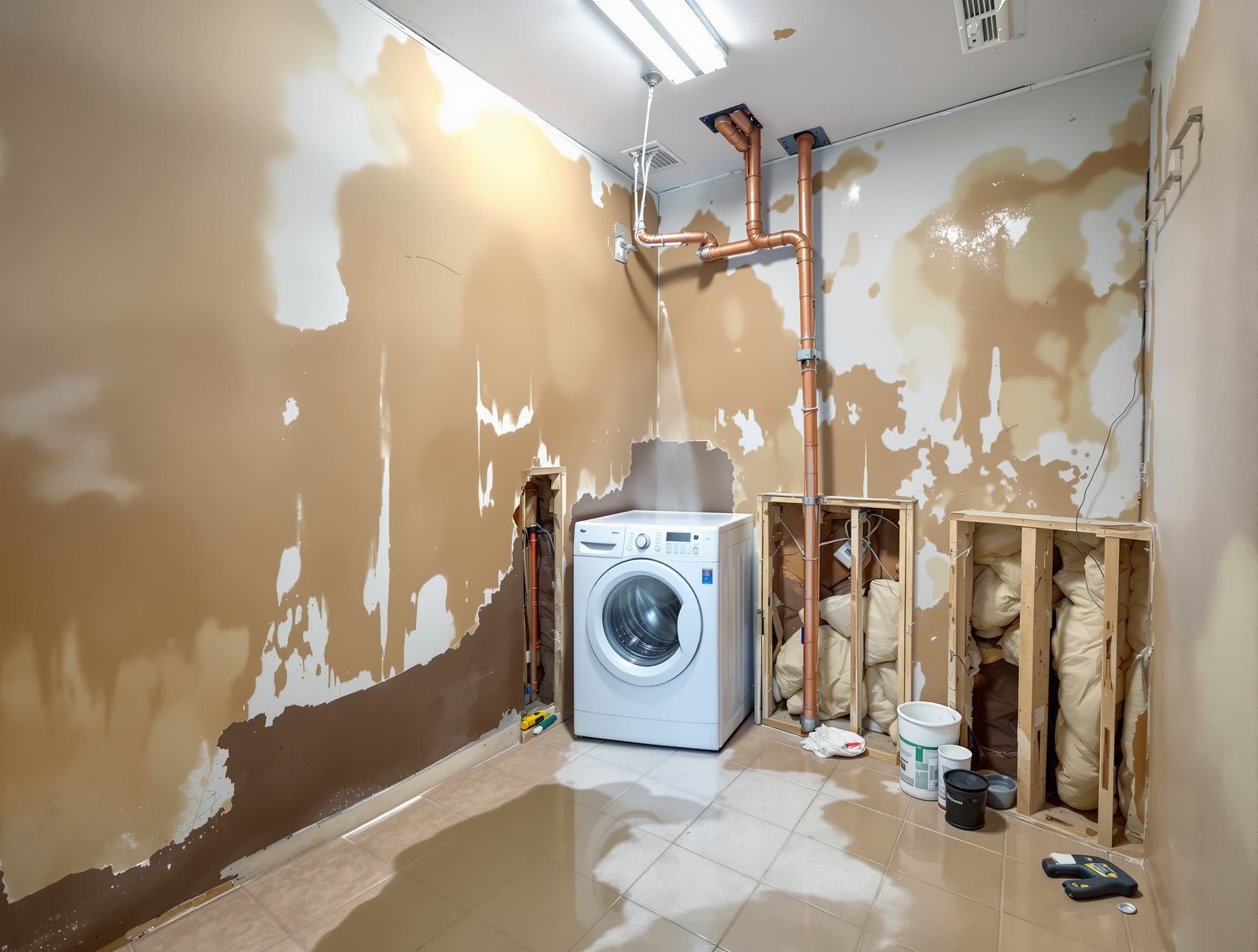
Washing machine supply line failed overnight. Extracted 200 gallons from laundry room and adjacent hallway. Contents manipulation, drying chamber setup.
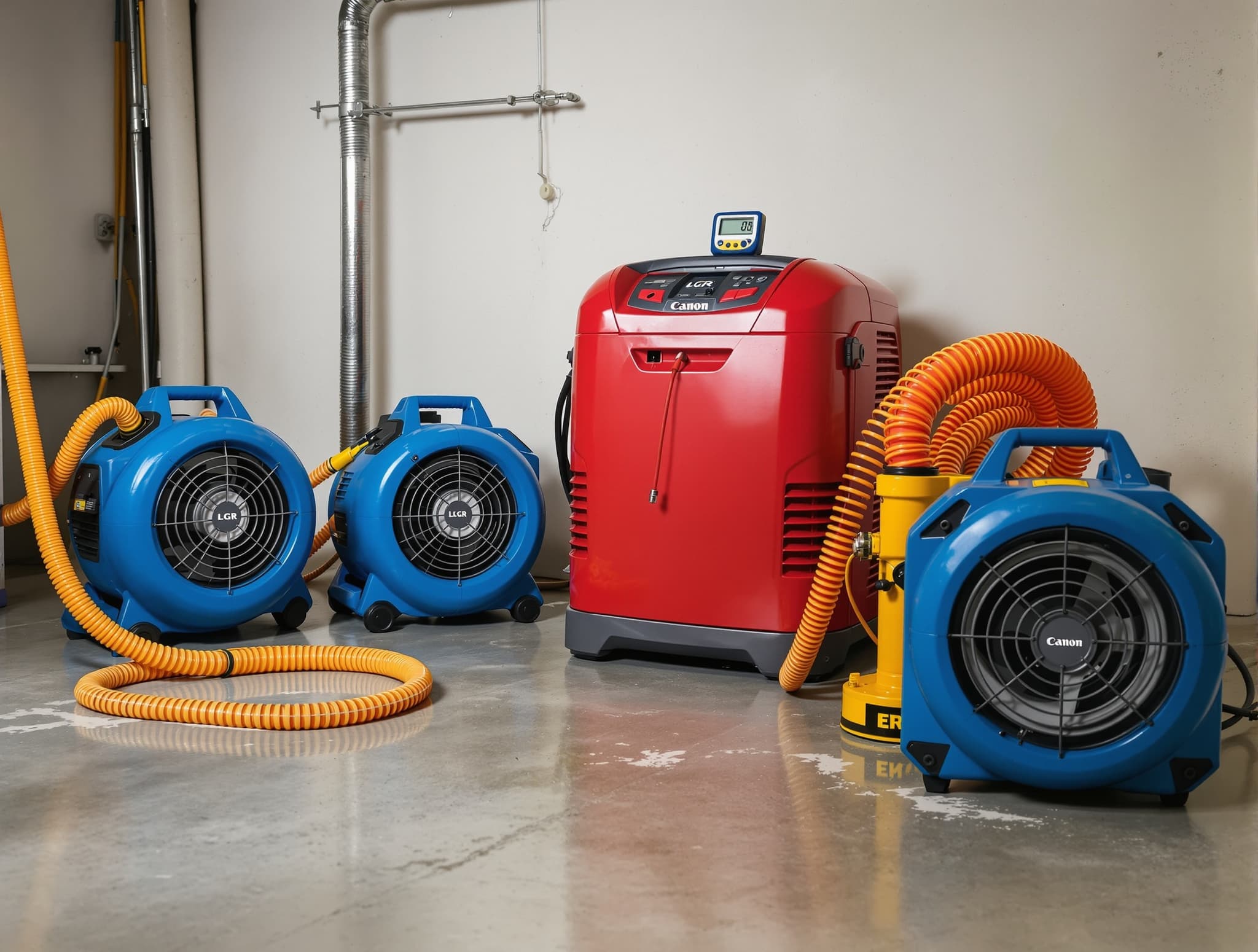
Sewage backup in finished basement. Full Category 3 protocol — biohazard cleanup, antimicrobial treatment, affected materials hauled. Family relocated 72 hours.
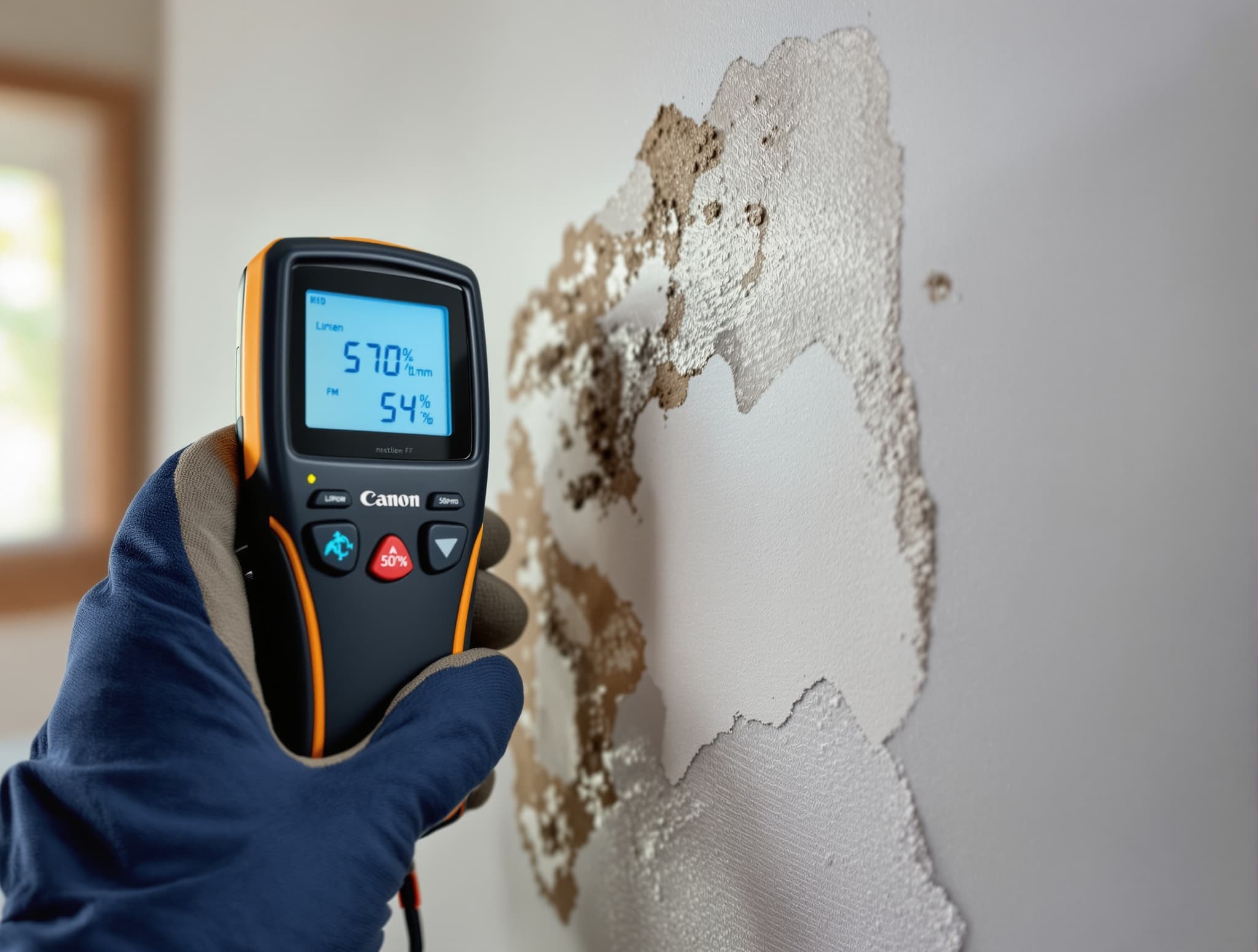
Slow roof leak over master bedroom discovered during ceiling repaint. Cut containment, dried structure, coordinated with roofer for permanent fix.
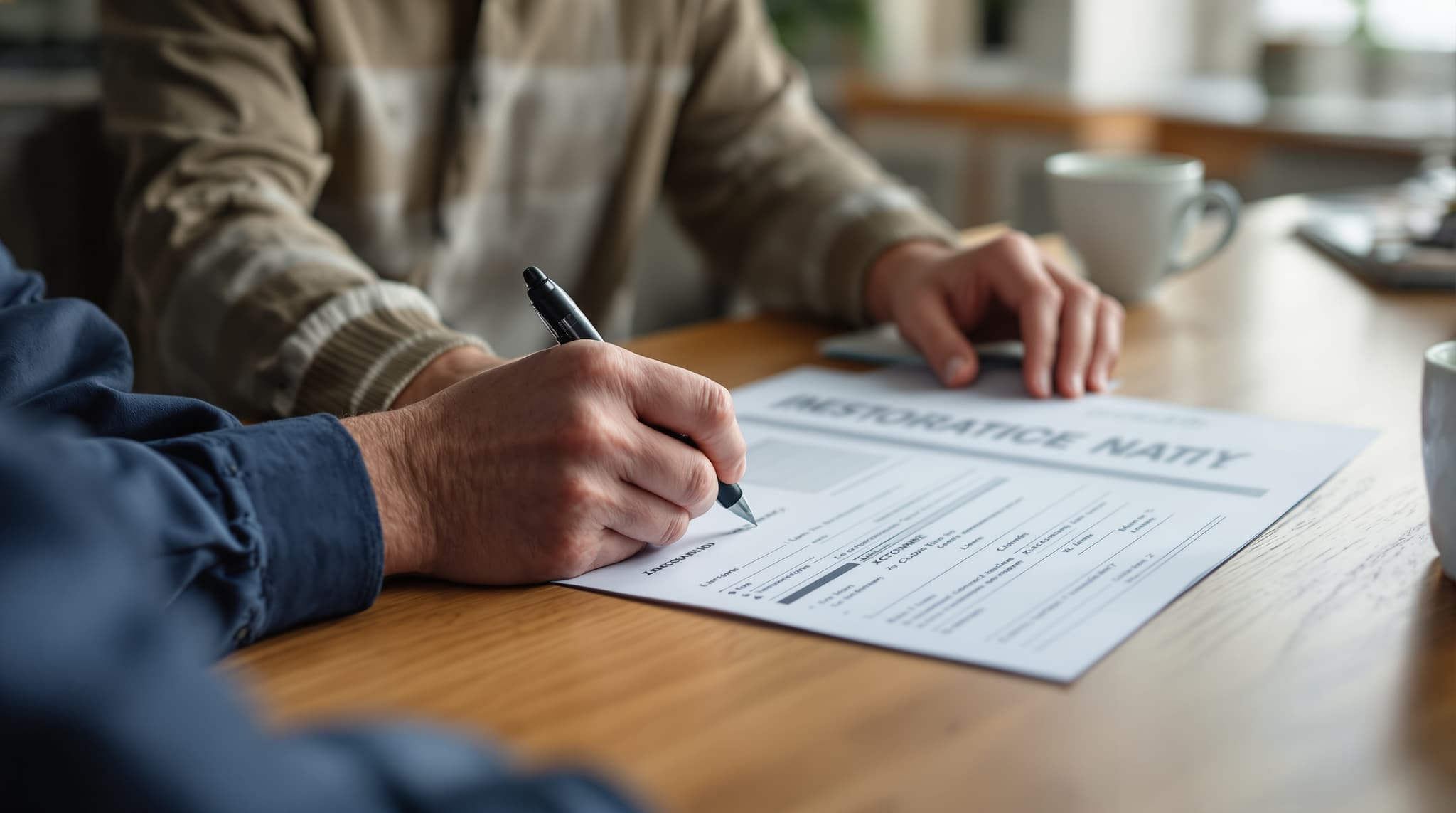
Frozen pipe burst in wall cavity second floor. Cut drywall, extracted, set up 3 air movers in the wall cavity. State Farm direct billing. 4-day cycle.
Flood damage restoration covers the full mitigation and drying process after a basement or structure takes on water — extraction, demo of non-salvageable materials, antimicrobial treatment, structural drying to IICRC S500 standards, and insurance documentation. On Long Island, this most commonly follows nor'easter storm surge flooding on the South Shore, sump pump failure during heavy rain events, and burst pipe events in older Nassau and Suffolk County homes.
FEMA Zone AE designates areas with a 1% annual chance of flooding — most South Shore Long Island communities including Freeport, Valley Stream, Long Beach, and Babylon have significant Zone AE coverage. Storm surge and rising water that enters your basement from a Zone AE flood event is classified as flood damage, which is excluded from standard HO3 homeowners policies and requires separate NFIP or private flood insurance. Water that enters from a failed sump pump, burst pipe, or storm-driven intrusion through the building envelope may be covered under standard homeowners insurance even in a flood zone. We identify and document the cause-of-loss on arrival — it is the most critical piece of your claim.
NFIP (National Flood Insurance Program) claims require a licensed flood adjuster assigned by your insurer — typically through FEMA's Write Your Own (WYO) program. We document the loss with photos, moisture readings, and scope immediately, which speeds up the adjuster visit. NFIP payouts are capped at $250,000 for structure and $100,000 for contents — if your home value exceeds those limits, private flood insurance tops up coverage. We work with both NFIP and private flood carriers and can explain which applies to your specific event.
South Shore communities like Freeport, Valley Stream, and Long Beach sit at or near sea level with storm drainage systems that can be overwhelmed when a nor'easter combines high tide, storm surge, and heavy rainfall. During these events, municipal storm drains back up and water enters basements through floor drains, sump pits, and foundation cracks from below — a hydraulic pressure event rather than a surface flooding event. This cause-of-loss distinction is important for insurance: sump backup and drain overflow may be covered under specific endorsements. We assess which drainage failure type occurred when we arrive.
Depends entirely on the source. Burst pipe, failed sump pump covered under your active policy, or appliance overflow — typically yes. Storm surge, rising groundwater, and municipal drain backup — typically require separate NFIP or private flood insurance, or a specific sewer/drain backup endorsement. We help you identify what coverage applies and document the cause-of-loss from the first hour on site — it is the most important factor in whether your claim is paid.
Basement drying averages 5-9 days depending on water depth, humidity, and how quickly we arrive. We use moisture meters — not a calendar — to call it dry. Day 1: extraction and setup. Days 2-5: drying cycle with daily readings. Days 5-9: equipment pulldown after dry standard is confirmed in all materials. Larger basements and events with wall saturation run toward the longer end.
Speed is the primary prevention tool — mold can establish within 48-72 hours in Long Island's coastal climate. The prevention protocol: extract standing water immediately, apply EPA-registered antimicrobial to exposed framing and subfloor within the first hours, remove porous materials (carpet padding, insulation, cardboard) that cannot be dried within the mold window, and maintain relative humidity below 50% with dehumidifiers throughout the dry-down. If we arrive within 24 hours, mold prevention is almost always achievable.
Usually no. The drying equipment is loud but confinable to the basement level. The exception is sewage backup (Category 3) — in those cases we recommend staying away from the affected area until containment is complete. We work around your family's schedule for access during daily moisture readings.
Babylon is one of our highest-volume service areas in Suffolk County. The Town of Babylon — including Babylon village, Lindenhurst, North Babylon, West Babylon, Amityville, and Copiague — sits on the South Shore along Great South Bay and is classified largely as FEMA Zone AE. Nor'easters push storm surge up through the bay and can overwhelm local storm drains, pushing water into basements from below through floor drains and sump pits. We stage a truck in Bay Shore and respond to Babylon flood calls within 2 hours, day or night. We document cause-of-loss on arrival because the source of flooding determines whether your standard homeowners policy or a separate NFIP flood policy covers the event.
Babylon and the surrounding Town of Babylon communities sit in FEMA Zone AE territory — the highest-risk flood zone designation — because of their proximity to Great South Bay. When a nor'easter tracks up the coast with a sustained southerly flow, storm surge from the Atlantic pushes into Moriches Bay and Great South Bay faster than the inlets can discharge it. The bay level rises and storm drains that typically flow outward begin to back up and reverse. Water enters basements through floor drains, through sump pits, and through foundation cracks from the hydrostatic pressure differential. This is a fundamentally different mechanism than a burst pipe or heavy-rain surface flooding, and it requires a different insurance analysis on arrival.
Standard HO-3 homeowners insurance does not cover storm surge or rising groundwater entering from outside the home — FEMA Zone AE flooding events require a separate NFIP or private flood insurance policy. However, if the flooding source is internal — a burst pipe, a sump pump covered under your active homeowners policy, or storm-driven water intrusion through the building envelope — standard homeowners insurance typically applies. The cause-of-loss distinction is the single most important determination we make on arrival in Babylon. We document the source with moisture mapping, photos, and a written narrative to give your adjuster — whether NFIP or homeowners — the file they need to process your claim.
Call the 24/7 dispatch line or send the form. Truck rolls to your driveway in under 60 minutes across Nassau & Suffolk County.
or fill out the dispatch form
Five fields. Truck rolls in under 60 minutes.